Some cars are restored. Others are rebuilt. And then there are the rare few that are completely reimagined from the ground up—where the original shell is simply the starting point for something far more ambitious.
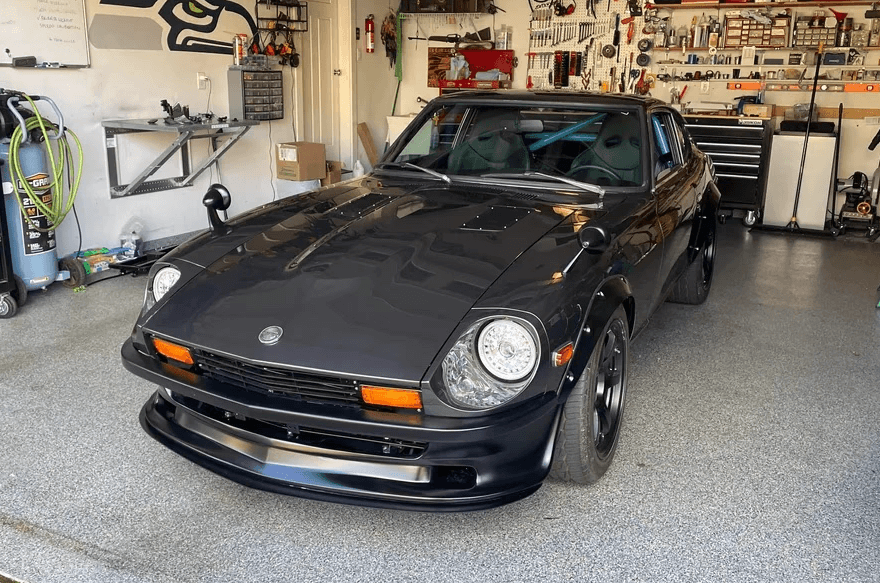
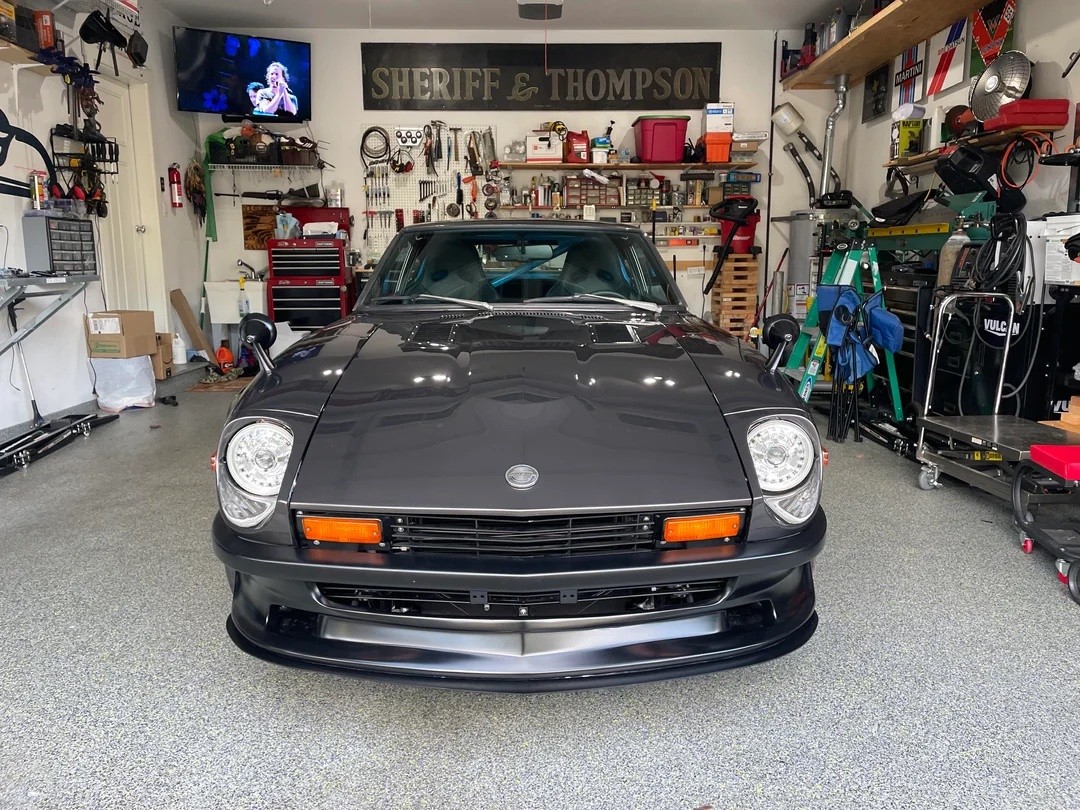
This 1976 Datsun 280Z is one of those cars. What began as a classic Japanese sports coupe has, over an eight-year span, been transformed into a fully modernized LS-powered restomod. Built from a bare unibody and rotated on a rotisserie, nearly every component has been re-engineered, replaced, or refined.
The result is a machine that respects its heritage—but refuses to be limited by it.
Some cars are restored. Others are rebuilt. And then there are the rare few that are completely reimagined from the ground up—where the original shell is simply the starting point for something far more ambitious.
This 1976 Datsun 280Z is one of those cars. What began as a classic Japanese sports coupe has, over an eight-year span, been transformed into a fully modernized LS-powered restomod. Built from a bare unibody and rotated on a rotisserie, nearly every component has been re-engineered, replaced, or refined.
The result is a machine that respects its heritage—but refuses to be limited by it.
The build began in the most uncompromising way possible: total disassembly.
The chassis was taken down to a bare unibody and mounted on a rotisserie, allowing every inch of the structure to be accessed, corrected, and prepared for its second life. Aside from media blasting and exterior paint, the entire build was executed by hand.
Eight years later, not a single system remains untouched. This is not a restoration—it is reconstruction with intent.
The build began in the most uncompromising way possible: total disassembly.
The chassis was taken down to a bare unibody and mounted on a rotisserie, allowing every inch of the structure to be accessed, corrected, and prepared for its second life. Aside from media blasting and exterior paint, the entire build was executed by hand.
Eight years later, not a single system remains untouched. This is not a restoration—it is reconstruction with intent.
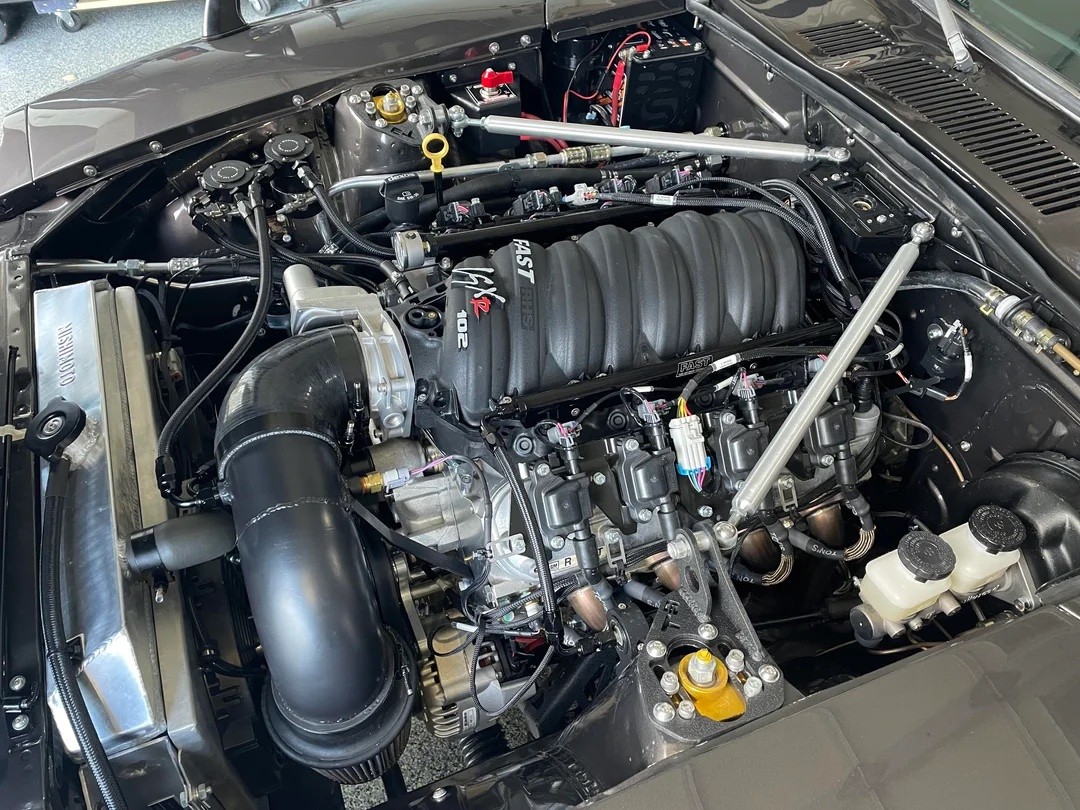
At the center of the car sits a cammed LS3-based powerplant: the LS376-480. Known for its strong factory architecture and aftermarket potential, it brings modern V8 performance into a chassis that was never originally designed for this level of output.
Backing it is a T56 Magnum 6-speed transmission, delivering a mechanical, driver-focused connection between engine and rear wheels—built to handle both power and longevity.
Engine management is handled by a Haltech Elite 2500 ECU, providing full standalone control over fueling, ignition, and drivability calibration. It’s the digital backbone that allows this hybrid machine to behave like a factory-built performance car.
At the center of the car sits a cammed LS3-based powerplant: the LS376-480. Known for its strong factory architecture and aftermarket potential, it brings modern V8 performance into a chassis that was never originally designed for this level of output.
Backing it is a T56 Magnum 6-speed transmission, delivering a mechanical, driver-focused connection between engine and rear wheels—built to handle both power and longevity.
Engine management is handled by a Haltech Elite 2500 ECU, providing full standalone control over fueling, ignition, and drivability calibration. It’s the digital backbone that allows this hybrid machine to behave like a factory-built performance car.
Drivetrain: Built For Reality
Drivetrain: Built For Reality
Power delivery is routed through a retained R200 differential, upgraded with a Quaife LSD for improved traction and progressive torque transfer.
To ensure durability under load, the rear end is further supported by CV axle upgrades from FutoFab—a known solution in the Z-car performance community for strengthening driveline reliability under modern power levels.
The result is a drivetrain that retains classic architecture while behaving with modern composure.
Power delivery is routed through a retained R200 differential, upgraded with a Quaife LSD for improved traction and progressive torque transfer.
To ensure durability under load, the rear end is further supported by CV axle upgrades from FutoFab—a known solution in the Z-car performance community for strengthening driveline reliability under modern power levels.
The result is a drivetrain that retains classic architecture while behaving with modern composure.
Visually and functionally, the car sits on Rays GramLights wheels—lightweight, purposeful, and aligned with the build’s performance-first philosophy.
They complement the chassis upgrades with reduced unsprung weight and a motorsport-inspired aesthetic that ties the entire exterior together.
Visually and functionally, the car sits on Rays GramLights wheels—lightweight, purposeful, and aligned with the build’s performance-first philosophy.
They complement the chassis upgrades with reduced unsprung weight and a motorsport-inspired aesthetic that ties the entire exterior together.
Interior: Function Over Fuss
Interior: Function Over Fuss
Inside, the philosophy shifts from restoration to restraint. The cabin is minimal, intentional, and driver-focused. Seating is provided by Cobra Seats, offering support without unnecessary complexity.
Additional interior elements from Skillard integrate cleanly into the Z’s cabin architecture, preserving the character of the original design while refining its usability.
Nothing inside exists without purpose
Inside, the philosophy shifts from restoration to restraint. The cabin is minimal, intentional, and driver-focused. Seating is provided by Cobra Seats, offering support without unnecessary complexity.
Additional interior elements from Skillard integrate cleanly into the Z’s cabin architecture, preserving the character of the original design while refining its usability.
Nothing inside exists without purpose
Originally finished in brown, the car’s new exterior takes a more nuanced approach.
The chosen tone—Porsche’s Anthracite Brown Metallic—shifts under light, revealing depth rather than flash.
Daytona Blue accents introduce contrast without overwhelming the design, creating a balance between heritage and individuality. It is a color combination that rewards close inspection rather than demanding attention.
Originally finished in brown, the car’s new exterior takes a more nuanced approach.
The chosen tone—Porsche’s Anthracite Brown Metallic—shifts under light, revealing depth rather than flash.
Daytona Blue accents introduce contrast without overwhelming the design, creating a balance between heritage and individuality. It is a color combination that rewards close inspection rather than demanding attention.
Chassis: 1976 Datsun 280Z (S30)
Engine: LS376-480 cammed LS3-based V8
Transmission: T56 Magnum 6-speed manual
ECU: Haltech Elite 2500 standalone
Differential: R200 with Quaife LSD
Axles: FutoFab CV conversion
Suspension: Techno Toy Tuning (front & rear)
Wheels: Rays GramLights
Interior: Cobra Seats + Skillard components
Chassis: 1976 Datsun 280Z (S30)
Engine: LS376-480 cammed LS3-based V8
Transmission: T56 Magnum 6-speed manual
ECU: Haltech Elite 2500 standalone
Differential: R200 with Quaife LSD
Axles: FutoFab CV conversion
Suspension: Techno Toy Tuning (front & rear)
Wheels: Rays GramLights
Interior: Cobra Seats + Skillard components
This 280Z is no longer defined by its original specification.
It is defined by intention.
A chassis once built for simplicity now carries modern performance hardware, precision electronics, and a level of execution that reflects nearly a decade of evolution.
It doesn’t just preserve the spirit of the S30—it advances it.
This 280Z is no longer defined by its original specification.
It is defined by intention.
A chassis once built for simplicity now carries modern performance hardware, precision electronics, and a level of execution that reflects nearly a decade of evolution.
It doesn’t just preserve the spirit of the S30—it advances it.